Why Do 90% of Critical Power Projects Insist on Bare Copper Conductors?
In electrical engineering, uncompromised conductivity and durability aren’t optional—they’re survival. At NAN CABLE, high-purity copper conductors (99.9% IEC 60228-certified) deliver zero-loss power transfer while outlasting extreme industrial demands.
Backed by 12,000+ mega projects—from Singapore data centers to Australian mining grids—our zero-halogen XLPE insulation and lifecycle cost control deliver reliability engineered to global standards.
Table of Contents
What Are Copper Cables?
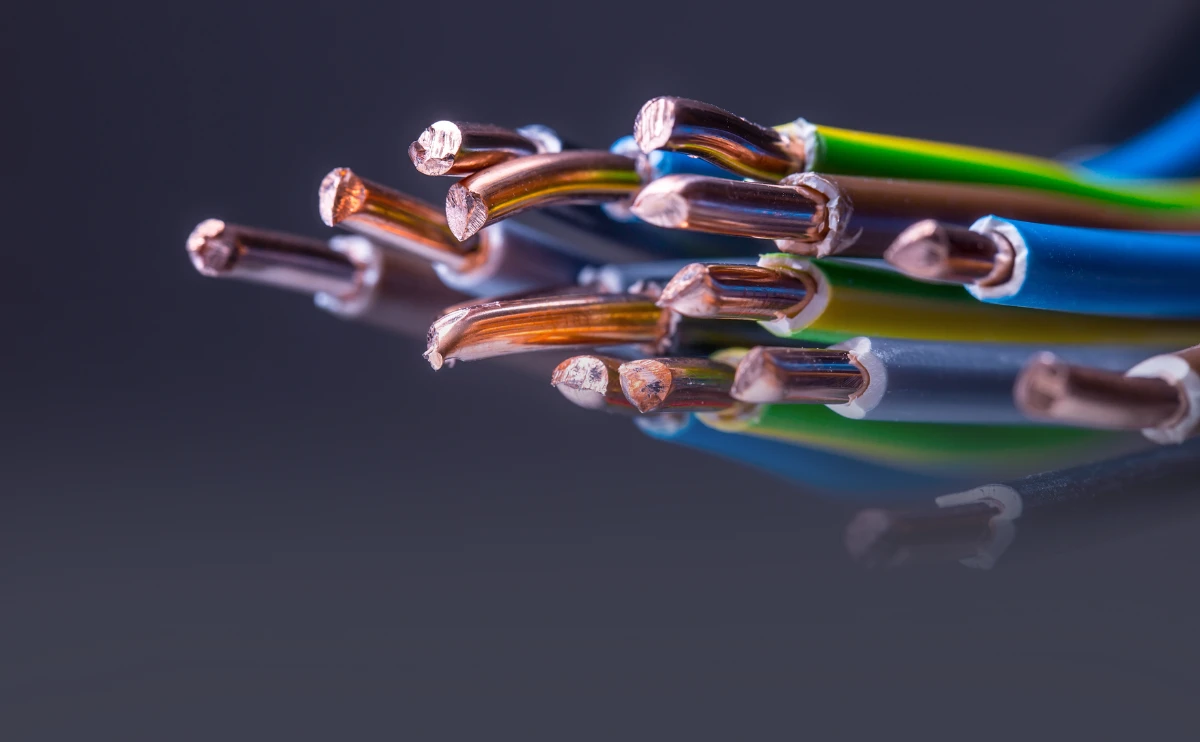
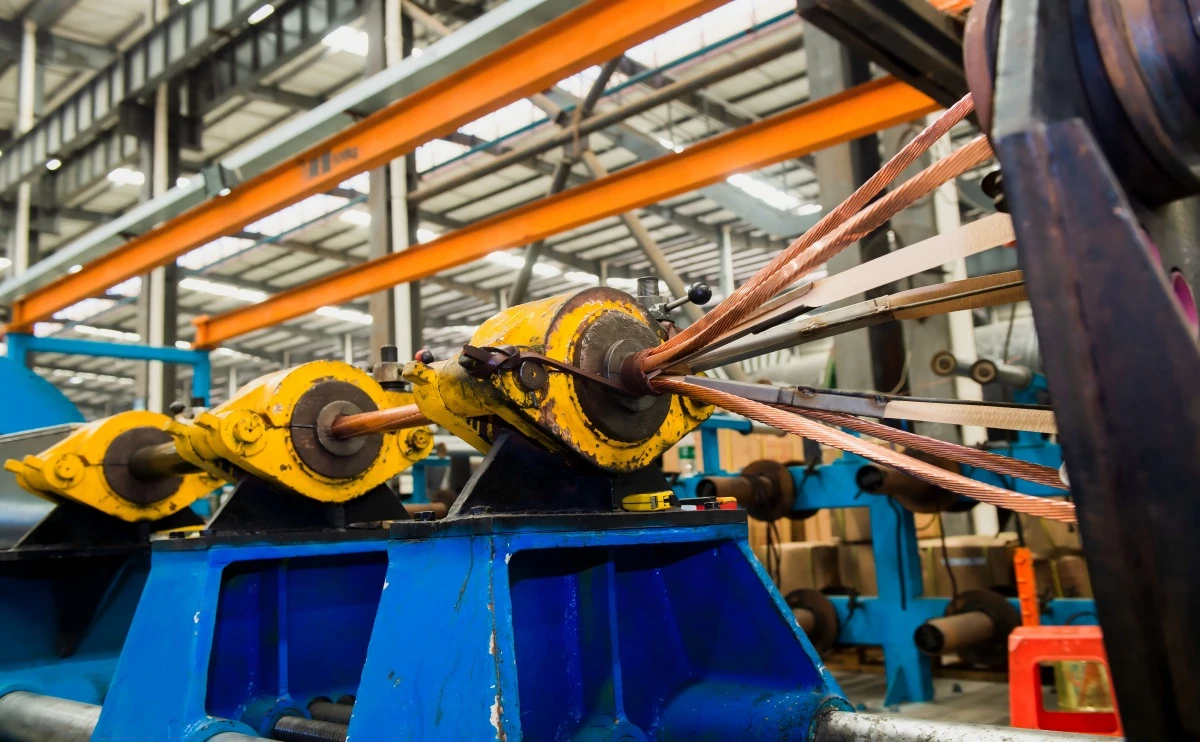
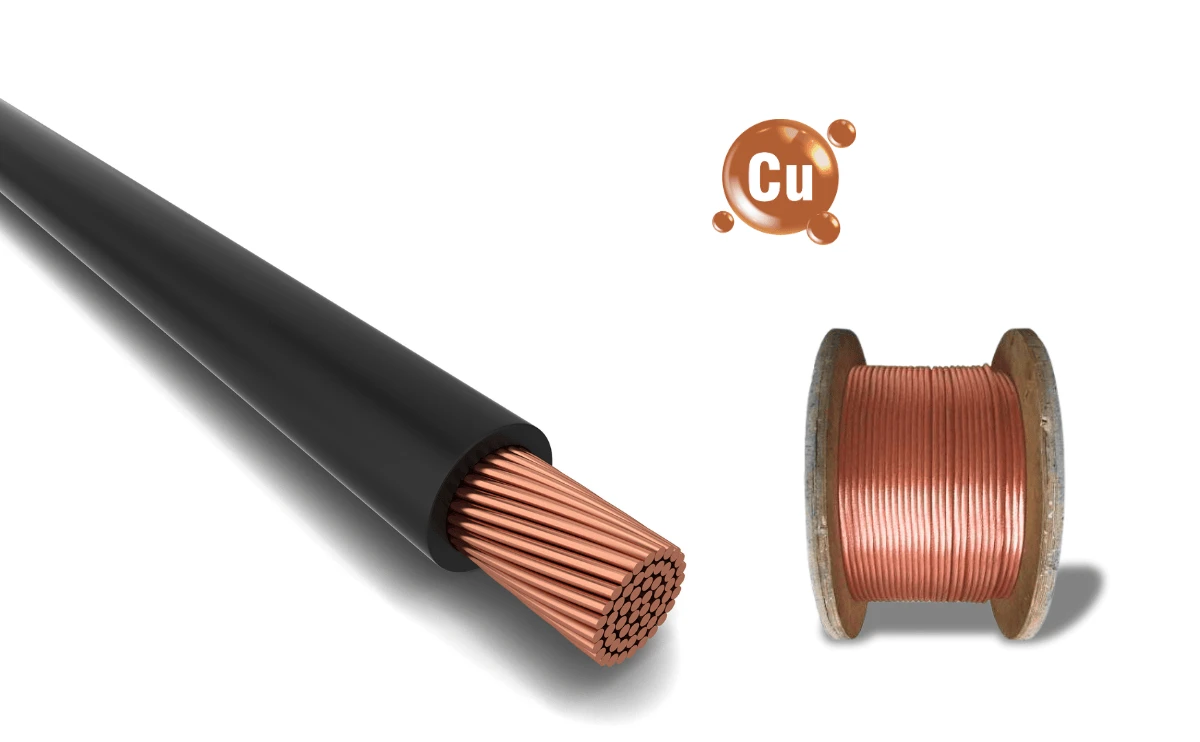
Copper (Cu) cables are electrical conductors using copper metal as their core material, forming the backbone of physical connectivity since the 1800s. These cables are crafted through extrusion – a process where molten copper ingots are shaped into wires – resulting in versatile formats like solid-core or braided strands.
Core Attributes Driving Dominance:
- Unmatched Conductivity:Copper offers superior electrical and thermal conductivity versus alternatives (e.g., aluminium), minimizing energy loss in transmission.
- Engineering Resilience:High ductility (flexibility), corrosion resistance, and tensile strength ensure reliability across environments.
- Ubiquitous Application Scope:From low-voltage household wiring (<600V) to high-power industrial grids (30kV+), telecommunication networks, and appliance circuits.
Today, >50% of globally mined copper is dedicated to cable manufacturing – a testament to its irreplaceable role in powering infrastructure, data networks, and daily technologies.
Copper Cable Advantages and Limitations
Advantages of Copper (Cu) Cables
Superior Conductivity
Lowest resistivity among cost-effective metals (≈40% lower than aluminium), enabling efficient power/data transmission with minimal energy loss.
High current-carrying capacity: ≈30% higher than equivalent aluminium cables.
Enhanced Durability
High tensile strength (200-250 N/mm²) and ductility (>30% elongation) resist breaking during bending/installation.
Exceptional corrosion & oxidation resistance, reducing long-term degradation.
Thermal Resilience
High melting point (1083°C) ensures stability in heat-intensive applications (e.g., industrial heaters, furnaces).
Lower operating temperature than aluminium under equal loads, improving safety.
Long-Term Reliability
Anti-fatigue properties prevent cracking under repeated stress.
Stable connections resist oxidation, minimizing failure risks in joints/terminals.
Considerations & Limitations
Higher Material Cost
Copper costs 3-5x more than aluminium per kg, impacting upfront project budgets.
Weight & Bulk
Greater density increases handling complexity in large-scale installations (e.g., power grids, data centers).
Security Risks
High scrap value makes exposed installations targets for theft, requiring protective measures.
In summary, while aluminium suits budget-focused projects, copper’s efficiency, lifespan (>40 years) , and reliability in critical systems often justify its premium long-term.
Copper Conductor Types: Solid vs. Stranded – How to Choose
Copper conductors are categorized into solid (single wire) and stranded (multi-wire bundles), each engineered for distinct mechanical and electrical demands.The table below illustrates how they differ.
| Factor | Solid Conductor | Stranded Conductor |
|---|---|---|
| Structure | Single copper wire per core | 7-19+ fine wires twisted per core |
| Flexibility | Rigid (≤5% bend radius) | Highly flexible (≥25% bend radius) |
| Attenuation | Lower signal loss (ideal for >50m runs) | Slightly higher loss (suits <25m) |
| Durability | Prone to metal fatigue if moved frequently | Vibration/flex-resistant |
| Cost (per metre) | 20-30% cheaper | Higher due to complex manufacturing |
When to Use Solid Conductors
Fixed Installations
Structured cabling (e.g., in-wall Ethernet, PoE security cameras).
Power distribution in industrial control panels (IEC 60228 Class 1/2).
Underground conduits with minimal post-installation access.
Key Standards:ANSI/TIA-568-C.2 (horizontal cabling), IEC 60228 Class 1.
When to Use Stranded Conductors
Dynamic Environments
Patch panels to devices (e.g., server racks, modular offices).
Robotics/CNC machinery requiring frequent cable movement.
Portable equipment (test instruments, temporary power units).
Key Standards:UL 62 (flexible cords), IEC 60228 Class 5/6.
ISO/IEC Power Cable Standards: Global Compliance for APAC
Core standards ensure the safety, efficiency, and interoperability of copper power cables worldwide. Key regulations are harmonized across Australia, China, and Southeast Asia.
| Standard | Scope | Key Copper Requirements |
|---|---|---|
| IEC60204-1 | Electrical equipment safety | ≥99.9% pure copper; electrolytic grade |
| IEC 60228 | Conductors for cables | Class 1 (solid), Class 2 (stranded), Class 5 (flexible) |
| IEC60502-1/2 | Power cables (1-30 kV) | Max conductor temp: 90°C (XLPE) / 70°C (PVC) |
| IEC 60332-1/-3 | Flame propagation resistance | Pass LSZH (Low Smoke Zero Halogen) testing |
Critical Technical Requirements
Conductor Purity
Minimum 99.9% electrolytic copper (IEC 60204-1 Annex B).
Temperature Ratings
Continuous operation: 90°C (XLPE insulation), 70°C (PVC) (IEC 60502-1).
Short-Circuit Current
Copper must withstand ≤5-sec fault current per IEC 60986 formulas.
Bending Radius
≥6× cable diameter for stranded power cables (Class 5/6).
Compliance Tips for APAC Projects
- Australia: Use AS/NZS 5000.1 for fixed wiring in buildings.
- China: Combine IEC 60228 with GB/T 12706 (HV cables) + CCC mark.
- Southeast Asia: Verify IEC 60502 + local LSZH certification (e.g., Singapore PSB, Thailand TISI).
Conclusion
Copper’s unmatched conductivity and durability sustain its dominance in global power distribution, enabling efficient energy transfer from grid to device. At NAN CABLE, we exclusively use high-purity copper conductors to ensure minimal energy loss, critical overheating protection, and APAC-compliant performance—from Australia’s AS/NZS 5000 to China’s GB/T 12706. Our ISO/IEC-optimized designs (IEC 60228 purity, IEC 60502 resilience) apply strategic conductor selection (solid cores for HV; Class 5/6 stranded for dynamics). Experience our copper excellence:
https://www.youtube.com/watch?v=bge_GEIX2XE