Australia’s electrical system is governed by some of the world’s strictest safety standards—largely because the country’s climate, installation practices, and regulatory framework demand higher reliability than many other regions. The foundation of these regulations is the AS/NZS 3000 Wiring Rules, a legally enforced standard that dictates everything from cable construction and insulation types to installation methods and colour codes. Guided by the National Electrical and Communications Association (NECA), these standards continually evolve to reflect new technologies, improving both safety and long-term performance.
Unlike the U.S. or Europe, Australia faces unique environmental challenges that strongly influence cable design. High ambient temperatures, strong UV exposure, and long outdoor cable runs require insulation materials such as V75 and V90, as well as durable constructions like TPS and XLPE, to ensure stability in harsh conditions. These stricter requirements mean that many international cable types cannot be used interchangeably in the Australian market.
Understanding these standards is essential for anyone working on Australian electrical projects—whether selecting building wires, power cables, or industrial-grade products—because compliance is not optional. It’s the foundation of safe, reliable, and long-lasting electrical installations across the country.
Table of Contents
Overview of AS/NZS Cable Standards
Australia’s electrical cable system is governed primarily by two key standard groups:
AS/NZS 3000 (Wiring Rules) and the AS/NZS 5000 series. These documents define safe cable construction, installation practices, and compliance requirements. The 2018 edition of AS/NZS 3000 has undergone multiple amendments—including the latest Amendment 3 (2023) and Ruling 1:2024—which further strengthen safety, material standards, and identification methods.
AS/NZS 3000:2018 (Wiring Rules) + Latest Amendments
AS/NZS 3000 sets requirements for:
- Wiring methods
- Cable installation environments
- Minimum safety clearances
- Earthing/grounding rules
- Identification of conductors
- Approved cable types for different applications
The 2023 amendment and 2024 ruling reinforce:
- clearer guidance on cable selection for high-temperature conditions
- improved requirements for UV resistance and outdoor installations
- updated conductor colour codes
- strengthened fire-performance expectations for building cables
The picture below displays the Updated Australian Wiring Color Codes (Post-2018, Confirmed in 2023 Amendments).
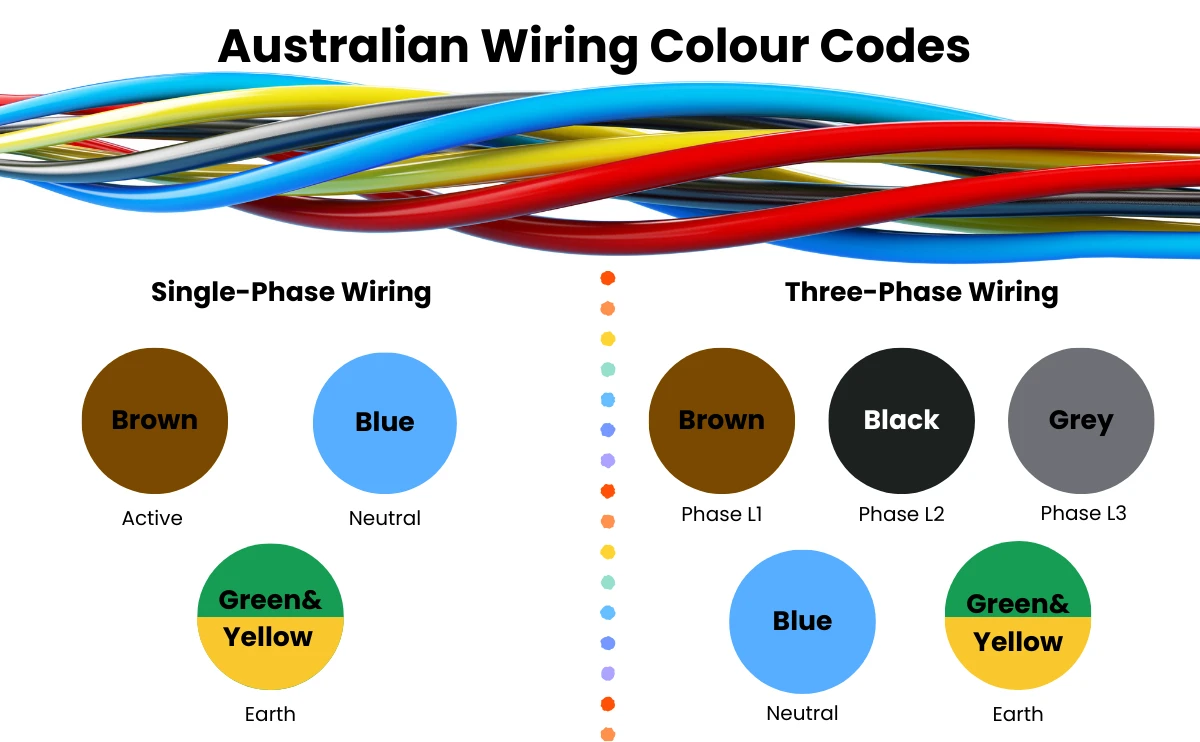
These colours align with IEC standards and remain the current rule under AS/NZS 3000 with no changes in 2023 or 2024.
AS/NZS 5000 Series (Cable Construction Standards)
The AS/NZS 5000 standards define how Australian cables must be built.
They specify insulation materials, sheath types, temperature ratings, and fire properties.
Most relevant standards:
AS/NZS 5000.1 – PVC-insulated cables (e.g., V75, V90, TPS)
AS/NZS 5000.2 – XLPE-insulated cables (e.g., XLPE building wires, power cables)
These remain the foundation of Australia’s cable naming system.
Australian Cable Naming Logic (V75, V90, TPS, XLPE)
Australian cable names reflect insulation type, temperature rating, and construction.
Here’s a clean table explaining each:
| Cable Type | Meaning / Standard | Temperature Rating | Typical Use |
|---|---|---|---|
| V75 | PVC insulation (AS/NZS 5000.1) | 75°C | General wiring, indoor installations |
| V90 | Higher-grade PVC insulation | 90°C | High-temperature environments, ceiling spaces |
| TPS | Flat “Twin & Earth” PVC cable | 75°C or 90°C | Household wiring, lighting, outlets |
| XLPE | Cross-linked polyethylene insulation (AS/NZS 5000.2) | 90°C | Industrial wiring, power distribution, underground |
Key Cable Types Commonly Used in Australia
Australia follows its own naming standards under AS/NZS regulations, and several cable types are widely used across residential, commercial, and industrial projects. Below are the most common and practical cable types you’ll see in the Australian market:
TPS Cable (Twin & Earth / Flat Cable)
TPS (Thermoplastic Sheathed Cable) is the most widely used building wire in Australia. It features a flat configuration with active, neutral, and earth conductors.Available in V75 and V90 variants, TPS is used for lighting, power points, and residential wiring under AS/NZS 5000.1.
XLPE Insulated Power Cable
XLPE (Cross-Linked Polyethylene) cables offer superior heat resistance, mechanical strength, and moisture resistance. Rated to 90°C, they are ideal for industrial plants, underground runs, solar systems, and power distribution.They are available in single-core and multi-core forms.
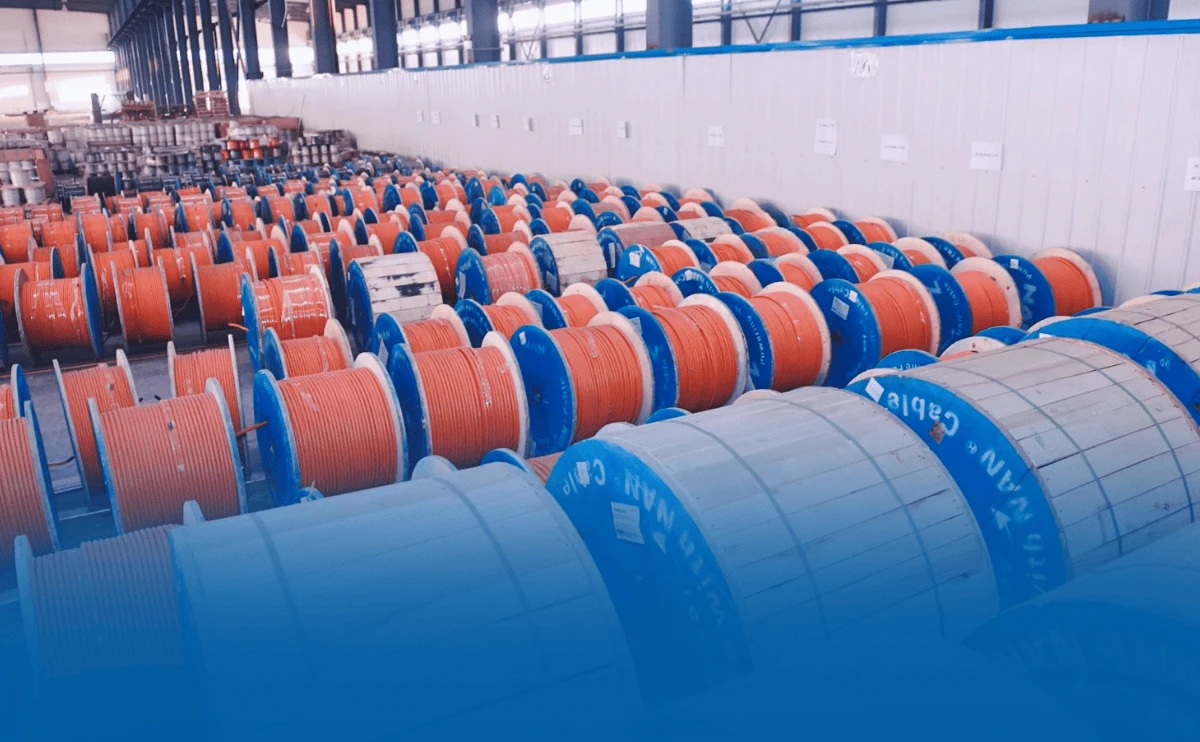
Orange Circular Cable
Orange Circular is a heavy-duty PVC-insulated and sheathed cable, identifiable by its round profile and bright orange outer jacket. Its robust construction gives it excellent flexibility and mechanical durability. It’s commonly used on construction sites, machinery, temporary power supplies, and industrial environments where cables need to withstand rough handling and outdoor exposure.
SDI Cable (Single Double Insulated)
SDI cable is a single-core conductor that features two layers of insulation—usually XLPE inner insulation with a tough PVC outer sheath. This double protection makes it suitable for mains connection, switchboards, battery systems, and solar installations where enhanced electrical and mechanical safety is required.
Coaxial & Data Cables (RG6, Cat6)
Coaxial cable (like RG6) has a central copper conductor surrounded by dielectric insulation, a metallic shield, and an outer sheath, making it ideal for TV, CCTV, and NBN signal transmission. Data cables such as Cat6 contain multiple twisted pairs to reduce interference and support high-speed network communication. These cables are used in home networking, offices, surveillance systems, and telecommunications.
Applications by Industry
| Industry | Common Cable Types | Typical Applications | Key Requirements |
|---|---|---|---|
| Residential Construction | TPS (Twin & Earth), V75/V90, Cat6, RG6 | General wiring, lighting circuits, power outlets, data & TV cabling | Safety, ease of installation, AS/NZS 3000 compliance |
| Commercial Buildings | XLPE power cables, Orange circular cables, Multicore control cables | HVAC systems, distribution boards, emergency circuits, communication networks | Higher load capacity, fire performance, durability |
| Solar Installations | PV-rated DC cables, XLPE DC/AC cables, SDI cables | Solar panels to inverters, battery connections, AC output wiring | UV resistance, heat stability, long outdoor lifespan |
| Mining & Heavy-Duty Environments | Armored XLPE cables, Heavy-duty orange circular cables, Trailing cables | Machinery supply, underground power, mobile equipment | Mechanical strength, abrasion resistance, moisture & chemical protection |
How to Select Cables for AU Projects
Selecting electrical cables in Australia requires more than matching a product to an application—it must comply with AS/NZS 3000, meet safety requirements, and withstand Australia’s harsh climate. Below are the key criteria every installer, engineer, or importer should consider.
1. Temperature Rating (V75 vs V90 vs XLPE)
Australia’s heat—especially in roof spaces—makes temperature rating critical:
V75 (PVC, 75°C): Standard indoor wiring with moderate temperature exposure
V90/V90HT (PVC, 90°C): Better for ceiling cavities, commercial buildings, or higher load currents
XLPE (90–110°C): Ideal for solar, industrial, outdoor, and underground installations
Why it matters:
Higher temperature tolerance means improved safety, reduced insulation stress, and longer service life in hot environments.
2. Voltage Rating (ELV, LV, MV)
Always match the cable to the system’s maximum voltage:
ELV: Data, coaxial, smart-home wiring
LV (450/750V or 0.6/1kV): TPS, V75, V90, XLPE building cables
MV (3.3–33kV): Mining, utilities, industrial distribution
Compliance reminder:
All cable selection must follow AS/NZS 3000 and AS/NZS 5000 specifications.
3. UV, Heat & Fire Resistance
The Australian climate demands strong environmental protection:
UV-resistant sheathing for outdoor, roof-mounted, or exposed conduits
Heat-resistant insulation (V90, XLPE) for attic spaces
LSZH options for public spaces and commercial buildings
Solar DC cables must meet strict UV, ozone, and temperature resistance (AS/NZS 5033 or EN50618)
General rule:
Outdoor = UV resistant; High heat = XLPE or V90; Public buildings = fire-safe materials.
4. Indoor vs Outdoor Cable Selection
Different environments require specific protective features:
| Environment | Recommended Cable Features |
|---|---|
| Indoor (walls, ceilings) | V75 or V90 PVC; flexible and easy to install |
| Outdoor (sun exposed) | UV-resistant PVC/XLPE sheathing |
| Underground | XLPE, double-insulated, or armoured cables |
| Wet/corrosive areas | Water- and chemical-resistant jackets |
| Solar rooftop | PV-rated cables with UV/heat/ozone resistance |
5. Installation Practices (Legal Requirements)
In Australia, DIY electrical work is illegal in most cases. All installations must be completed by a licensed electrician.Work must comply with AS/NZS 3000 Wiring Rules.
Proper installation ensures the system is safe, permanently connected, and not at risk of fire or shock hazards.
6. Maintenance & Upgrading Existing Wiring
Older Australian homes often need wiring checks due to aging systems or outdated colour codes.
Signs you may need an upgrade:
- Frequent breaker trips
- Flickering lights
- Old pre-2018 wiring colours (red/black/green)
- Brittle insulation or visible wear
Regular inspections help prevent failures and ensure alignment with current AS/NZS safety requirements.
Conclusion
Understanding Australia’s cable standards makes it much easier to choose products that are safe, compliant, and built for local conditions. With 15 years serving the Australian market and 40 years of global project experience, NAN CABLE supports contractors, engineers, and distributors in selecting the right cable for every application.
If you’d like guidance for your project—or need help confirming which cable meets AS/NZS requirements, our team is ready to assist.
You can explore for more installation insights, such as armoured cable installation tips.
Have an upcoming project?
Get in touch with NAN CABLE, and we’ll help you choose the right cables with confidence.